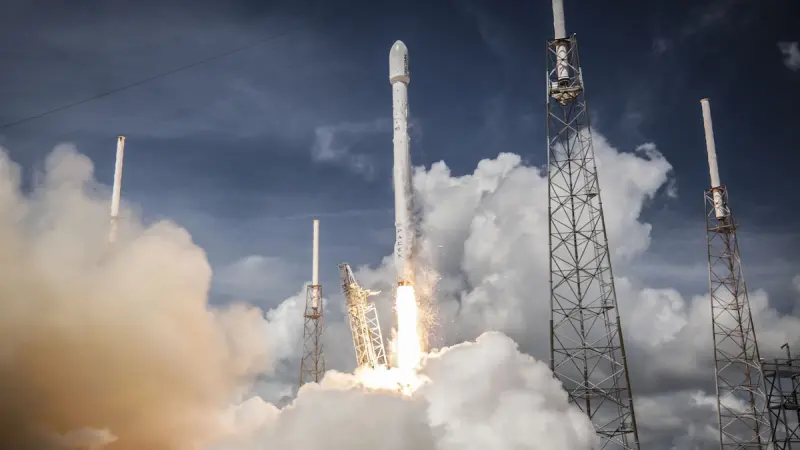
Missile vs Rocket: Why Technical Translation Accuracy Matters
Missile vs Rocket: Why Technical Translation Accuracy Matters
In the English language, the distinction between a "missile" and a "rocket" is precise and consequential. A rocket is a vehicle or projectile propelled by the expulsion of exhaust gases from a combustion chamber — it follows a ballistic trajectory and is unguided after launch. A missile, by contrast, is a guided weapon — it contains a guidance system that allows it to adjust its flight path toward a target. This distinction is fundamental in defense, aerospace, and arms control contexts. A country testing a space launch vehicle (a rocket) is doing something categorically different from a country testing a guided ballistic missile, even though both use rocket propulsion technology.
Yet across the world's major languages, this seemingly straightforward distinction becomes remarkably complex. In Arabic, the word صاروخ (sārūkh) is used for both missiles and rockets, with context alone determining which meaning is intended. In Russian, ракета (raketa) similarly covers both concepts. In Chinese, the distinction is clearer — 导弹 (dǎodàn, literally "guided projectile") means missile, while 火箭 (huǒjiàn, literally "fire arrow") means rocket — but even here, media and political discourse sometimes blur the lines. These linguistic differences are not academic curiosities. They have real-world consequences for international security, arms control negotiations, intelligence analysis, and public understanding of geopolitical events.
When a news agency reports that a country has conducted a "missile test" and the original-language source actually described a "rocket launch," the translation has fundamentally changed the meaning of the event. A missile test implies the development of guided weapons capability — a potential threat that triggers diplomatic responses, sanctions discussions, and military contingency planning. A rocket launch for satellite deployment or space exploration carries entirely different implications. The translator who renders one as the other is not making a minor linguistic error — they are potentially reshaping international perceptions of a sovereign nation's intentions and capabilities.
This article examines how the missile-versus-rocket translation challenge manifests across languages, the real-world consequences of getting it wrong, and why organizations dealing with defense, aerospace, and international affairs require translators with deep technical expertise. At Smart World Legal Translation (SWLT), we specialize in technical and legal translation where precision is paramount — because in these fields, a single word can change everything.
How Languages Handle the Missile-Rocket Distinction
The way different languages categorize missiles and rockets reveals fundamental differences in how cultures conceptualize weapons technology. Understanding these differences is essential for anyone involved in translating defense-related content.
Arabic presents one of the most significant challenges. The word صاروخ serves as a catch-all term for any self-propelled projectile, whether guided or unguided. An Arabic news report about إطلاق صاروخ could refer to a missile launch, a rocket attack, a space launch vehicle, or even a firework rocket in certain colloquial contexts. Professional translators must examine the full context — the type of payload, the launching entity, the described trajectory, and the political framework — to determine the correct English equivalent. In the context of Middle Eastern conflicts, where Arabic-language media frequently reports on both unguided rocket attacks (such as Katyusha-type rockets) and guided missile strikes, this ambiguity has direct implications for how international audiences understand the nature and severity of attacks.
Russian faces a similar challenge with ракета, which encompasses everything from intercontinental ballistic missiles to space launch vehicles to unguided artillery rockets. The Russian language does have more specific terms — управляемая ракета (guided missile) and неуправляемая ракета (unguided rocket) — but in common usage, military communiqués, and media reporting, the single word ракета predominates. This created significant translation challenges during the Cold War, when Western intelligence analysts had to determine from context whether Soviet references to ракета indicated development of offensive guided weapons or defensive unguided systems. The distinction often carried strategic implications that influenced NATO defense planning and arms control negotiations.
Chinese offers the clearest linguistic distinction. 导弹 (dǎodàn) — literally "guided projectile" — unambiguously refers to a guided missile. 火箭 (huǒjiàn) — literally "fire arrow" — refers to a rocket, whether a space launch vehicle or an unguided projectile. This clarity is reflected in Chinese military and aerospace documentation, which uses precise terminology. However, when Chinese-language content is translated by non-specialist translators, these clear distinctions can be lost, resulting in English translations that conflate the two concepts. In Urdu, میزائل (a loanword from English) typically refers to guided missiles, while راکٹ (also borrowed) refers to rockets, though the distinction is not always maintained in popular media.
Real-World Consequences of Missile-Rocket Mistranslation
The consequences of confusing missiles and rockets in translation are not theoretical — they have manifested repeatedly in international affairs, distorting public perception and complicating diplomatic efforts.
Iran's space program has been a recurring case study in this problem. When Iran launches a satellite carrier — a space launch vehicle that uses rocket propulsion — Western media outlets have frequently reported these events as "missile tests" or "ballistic missile launches." While the underlying technology shares commonalities (both use rocket engines and ballistic trajectories), the intent and capability being demonstrated are fundamentally different. A satellite launch vehicle is designed to place a payload into orbit; a ballistic missile is designed to deliver a warhead to a target. Conflating the two in translation has contributed to international pressure and sanctions that may not have been proportionate to the actual activity, while simultaneously undermining the credibility of legitimate concerns about Iran's actual missile development programs.
North Korea's launches present a similar challenge. Pyongyang has conducted both satellite launches (using space launch vehicles) and ballistic missile tests, and the international community's response to each has been — and should be — different. When translations fail to distinguish between these activities, the result is a muddled understanding of North Korea's capabilities and intentions. This ambiguity serves neither hawks nor doves in the policy debate; it simply degrades the quality of information available to decision-makers.
In arms control negotiations, the missile-rocket distinction is legally consequential. Treaties like the Intermediate-Range Nuclear Forces (INF) Treaty and the New START agreement contain precise definitions of the weapons systems they cover. A translation that renders "missile" where the source text says "rocket" — or vice versa — could create ambiguities in treaty interpretation that undermine the entire framework of arms control. Negotiators and legal translators working on these documents must possess not only bilingual fluency but deep expertise in weapons technology and international law.
Commonly Mistranslated Defense and Aerospace Terms
The missile-rocket distinction is just one example of the broader challenge of translating technical defense and aerospace terminology. Here are key terms where translation errors carry serious consequences.
Missile vs Rocket
A missile is a guided weapon with an onboard guidance system; a rocket is an unguided projectile or launch vehicle. Arabic (صاروخ) and Russian (ракета) use a single word for both, requiring expert contextual analysis to translate correctly.
Warhead vs Payload
A warhead is the explosive component of a weapon; a payload is the cargo carried by a launch vehicle (which may be a satellite, scientific instrument, or — in weapons — a warhead). Confusing these terms changes whether an event is perceived as military or civilian.
Deterrence vs Defense
Deterrence involves threatening retaliation to prevent attack; defense involves actively intercepting or defeating an attack. Translation errors between these concepts can misrepresent a nation's strategic posture and intentions.
Nuclear vs Atomic
In technical usage, "nuclear" refers to fission and fusion weapons, while "atomic" specifically refers to fission weapons. Many languages use these interchangeably, but in arms control and technical contexts, the distinction matters for treaty compliance.
Launch Vehicle vs Ballistic Missile
A space launch vehicle puts satellites into orbit; a ballistic missile delivers a warhead to a target. Both use similar propulsion technology, making accurate translation critical for correctly characterizing a country's activities.
Drone vs UAV vs UAS
The terminology for unmanned aerial systems varies significantly across languages. Whether a system is described as a surveillance platform or a strike-capable weapon depends on precise translation of technical specifications and operational context.
When Mistranslation Escalates Tensions
The international media ecosystem operates at a speed that leaves little room for nuanced translation. When a country announces a launch event, news agencies around the world race to report it first. In this rush, the critical distinction between "missile" and "rocket" is frequently lost. A satellite launch reported as a "missile test" triggers a cascade of diplomatic responses — **condemnation statements, emergency UN Security Council sessions, sanctions discussions, and military posture adjustments** — that may be disproportionate to the actual event. This pattern has played out repeatedly with Iran, North Korea, India, and Pakistan, where space program activities have been reported in Western media using weapons-oriented terminology. The resulting misperception does not just affect diplomatic relations — it shapes **public opinion**, influences electoral politics, and can create pressure for military responses to events that were fundamentally civilian in nature. Intelligence agencies face the same challenge. An analyst reading a machine-translated intercept that describes a "missile" test when the source language actually referenced a "rocket" launch may produce a threat assessment that overestimates an adversary's capabilities. These assessments inform defense spending, military deployments, and alliance strategies — decisions with **billions of dollars and millions of lives** at stake.
The Role of Expert Technical Translators
The solution to the missile-rocket translation challenge — and the broader challenge of defense and aerospace terminology — is not better machines but **better-qualified humans**. Technical translation in the defense sector requires linguists who possess three overlapping competencies: native-level fluency in both source and target languages, deep understanding of weapons technology and aerospace engineering concepts, and familiarity with the political and strategic context in which technical communications occur. At **SWLT**, our technical translation team includes linguists with backgrounds in engineering, defense studies, and international relations. When translating a document that references صاروخ or ракета, our translators do not simply choose the first dictionary equivalent — they analyze the technical context, the publishing entity, the intended audience, and the strategic implications to determine the **precise English term** that accurately conveys the original meaning. This level of expertise is not a luxury — it is a necessity. In defense and aerospace translation, the difference between "missile" and "rocket" is the difference between a weapons test and a space launch, between a treaty violation and a legitimate scientific endeavor, between an act of aggression and a step toward peaceful exploration. **Getting it right matters.**
Precision in Translation: A Strategic Imperative
The missile-versus-rocket translation challenge is a microcosm of a larger truth about technical translation: words carry weight, and in specialized domains, the wrong word can change reality. Defense organizations, aerospace companies, diplomatic services, and intelligence agencies cannot afford the ambiguity that arises from imprecise translation. Every document they produce, every communication they translate, every report they analyze carries implications that extend far beyond the page.
As the global security environment grows more complex — with new technologies, new actors, and new domains of competition — the demand for precise, expert technical translation will only increase. Machine translation tools, while useful for general content, remain inadequate for the specialized terminology, contextual judgment, and strategic awareness that defense and aerospace translation demands. The human translator, armed with technical expertise and cultural competence, remains irreplaceable in these critical domains.
At Smart World Legal Translation (SWLT), we bring this level of precision to every project. Our experience in legal, technical, and government translation has taught us that accuracy is not negotiable — it is the foundation upon which trust, security, and effective communication are built. Whether you need defense procurement documents translated, aerospace technical manuals localized, or diplomatic correspondence rendered with absolute fidelity, SWLT delivers the expertise that high-stakes translation demands. Contact us today to discuss how our technical translation services can support your organization's mission.